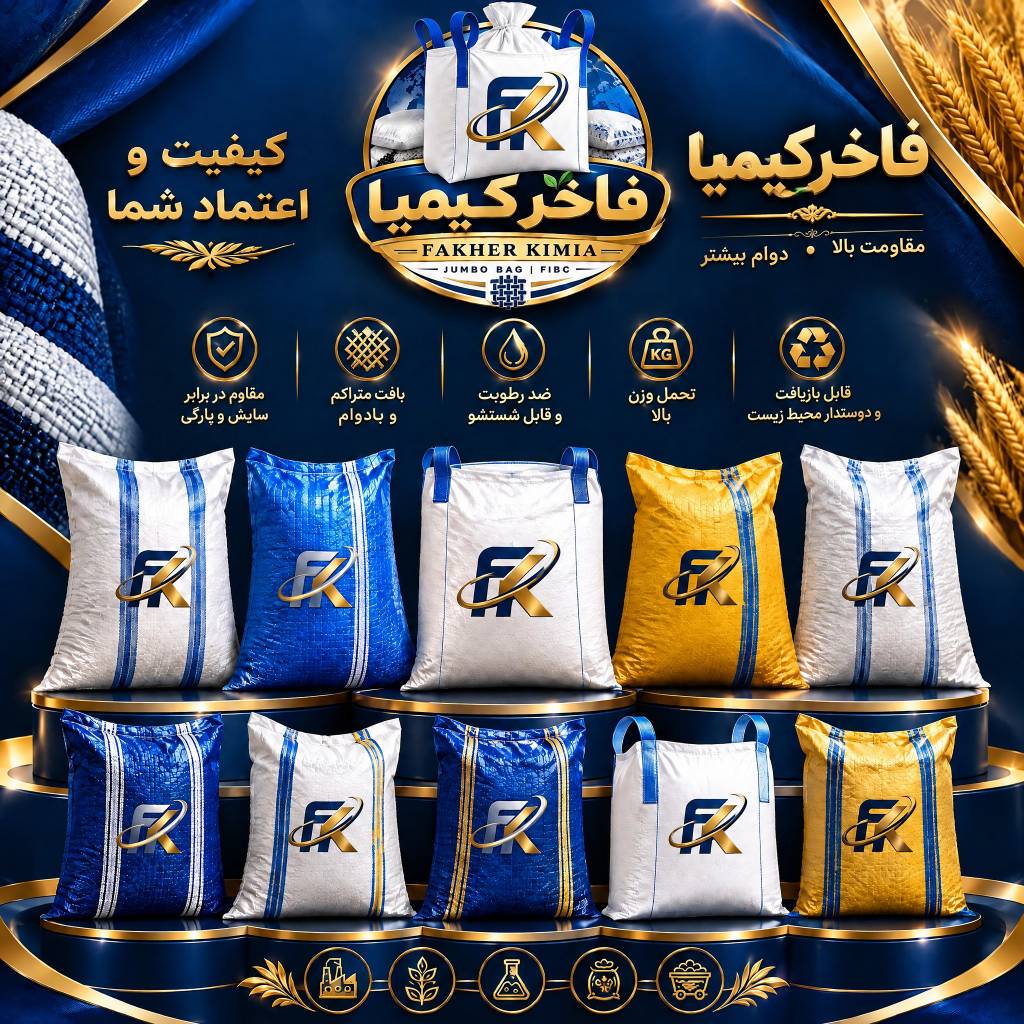
Jumbo bags — also known as FIBC (Flexible Intermediate Bulk Container) bags — are vital tools for packaging and transporting bulk materials across industries. Their high capacity makes it possible to store and move large quantities of product, but choosing the wrong bag can lead to financial losses, product damage and even safety hazards for workers. This article explains every aspect of FIBC weight capacity and gives you the key criteria for choosing correctly.
Key Characteristics of a Jumbo Bag
Raw Materials
FIBC bags are typically made from polypropylene (PP), polyethylene (PE) or specialty weaves. The choice of raw material strongly affects load capacity: polypropylene bags resist tearing and pressure far better and can therefore carry heavier loads, while polyethylene weaves are lighter but have lower load ratings. Material quality also determines the bag's durability and service life.
Design and Standard Dimensions
Dimensions and design play a fundamental role in matching the bag to its load. For example, a 100×100 cm bag can carry significantly heavier loads than a smaller one. Good design — such as reinforced top loops — distributes weight evenly and prevents tearing during transport. Standard FIBC configurations include spout or open tops, discharge spouts and 4-corner lifting loops.
Tare Weight of the Bag
The bag's own weight matters too: a lighter bag leaves more room for payload and reduces shipping costs. A well-designed 250-gram bag for dry goods can carry many times its own weight — a major advantage for producers looking to cut logistics expenses.
How to Choose the Right Bag
Selection Criteria
Focus on three criteria: capacity (matched to the weight and volume of your load — cement or grain need high-strength bags), material (quality PP offers the best strength-to-weight ratio), and stitching (strong, high-quality seams prevent leakage and content damage).
Load Type and Transport Conditions
If your load is chemical, choose bags that resist chemical attack and prevent leakage. In rainy or humid conditions, laminated or waterproof bags are the better choice. Temperature, humidity and the type of vehicle all influence the decision — loads exposed to impact need tougher bags.
Applications by Industry
Food Industry
FIBCs are widely used for grains, flour and dry food products. Their high load capacity and moisture resistance make them ideal for storage and transport; in flour mills, 1-ton jumbo bags cut transport costs and raise productivity. For food use, food-grade and non-toxic certification of the raw material is essential.
Chemical Industry
Chemical powders, pigment raw materials and hazardous compounds are commonly packed in FIBCs. The main benefit is leak prevention and environmental protection. Bags for aggressive chemicals may need protective coatings or liners.
Construction
Cement, sand and aggregates are moved in jumbo bags on large projects, dramatically reducing handling time and cost. Pay attention to fabric thickness and seam type so the bag withstands the pressure of dense materials.
Comparison with Other Bags
Plastic Bags
Light and cheap, but limited to a few kilograms of load. FIBCs carry 1,000–2,000 kg thanks to their woven structure and materials.
Paper Bags
Suited to light food products; a typical paper bag handles 50–70 kg. FIBCs carry far heavier loads, though paper has some biodegradability advantages.
Metal Containers
Used in heavy and mining industries for very dense loads, but their own weight raises transport costs. FIBCs are lighter, multi-layered and far more economical for bulky heavy goods.
Ultimately, material quality and the production process determine real capacity. High-quality woven fibers consistently outperform cheap alternatives.
Safety in Use
Correct Filling
Distribute the load evenly and never exceed the rated capacity. Use appropriate equipment (cranes, forklifts) for lifting heavy bags.
Care and Storage
Store bags in a dry place away from direct sunlight to protect the fibers. Keep them off rough or wet surfaces, and make sure stored chemicals cannot attack the fabric. Inspect bags before and after each use — any tear or wear must be addressed immediately.
Capacity Under Different Conditions
Temperature and Humidity
High temperatures soften the polymer and reduce capacity; high humidity adds weight and weakens the structure. These factors matter especially for food and chemical products.
Overloading and Uneven Loading
Excess or unbalanced loads create weak points and cause tears or leaks. Load testing and structural evaluation — simulating real temperature, humidity and payload conditions — verify the bag's true capacity and prevent costly failures.
FAQ
How much weight can a jumbo bag carry?
Typically between 1,000 and 2,500 kg, depending on materials, design and construction. Quality polypropylene bags handle the heaviest loads.
How do I choose the right bag?
Consider your load, the material and the transport conditions; check tear resistance, tare weight and the manufacturer's technical specifications.
Are FIBC bags waterproof?
Not by standard, but coatings, lamination or an inner PE liner give them effective moisture protection — request it when ordering.
What problems can occur?
Tearing or leaking — usually from overloading or wrong bag selection. Correct specification and staff training prevent most incidents.
Conclusion
Load capacity is the decisive factor when buying an FIBC. Bags manufactured by Fakher Kimia carry heavy loads safely under varied conditions, meet safety standards, and can be customized in size, GSM, liner and printing. For free consultation on capacity and sizing, contact our sales engineers.